CT Scan: Advanced Computed Tomography at Sanconfind Medical Center
Computed Tomography, commonly known as CT or CAT scan, represents one of the most significant advances in diagnostic imaging since the discovery of X-rays. At Sanconfind Medical Center in Poiana Câmpina, Romania, our CT imaging department provides patients and referring physicians with high-quality diagnostic imaging that combines technological sophistication with expert interpretation, delivering the accurate diagnoses that guide effective treatment decisions.
Our modern CT scanner and experienced radiology team enable us to visualize internal structures with remarkable detail, supporting the diagnosis and management of conditions affecting virtually every part of the body.
What is a CT Scan?
A CT scan uses X-ray technology in a sophisticated way to create detailed cross-sectional images of the body. Unlike conventional X-rays that produce flat, two-dimensional images, CT creates a series of "slices" through the body that can be viewed individually or reconstructed into three-dimensional models.
How CT Technology Works
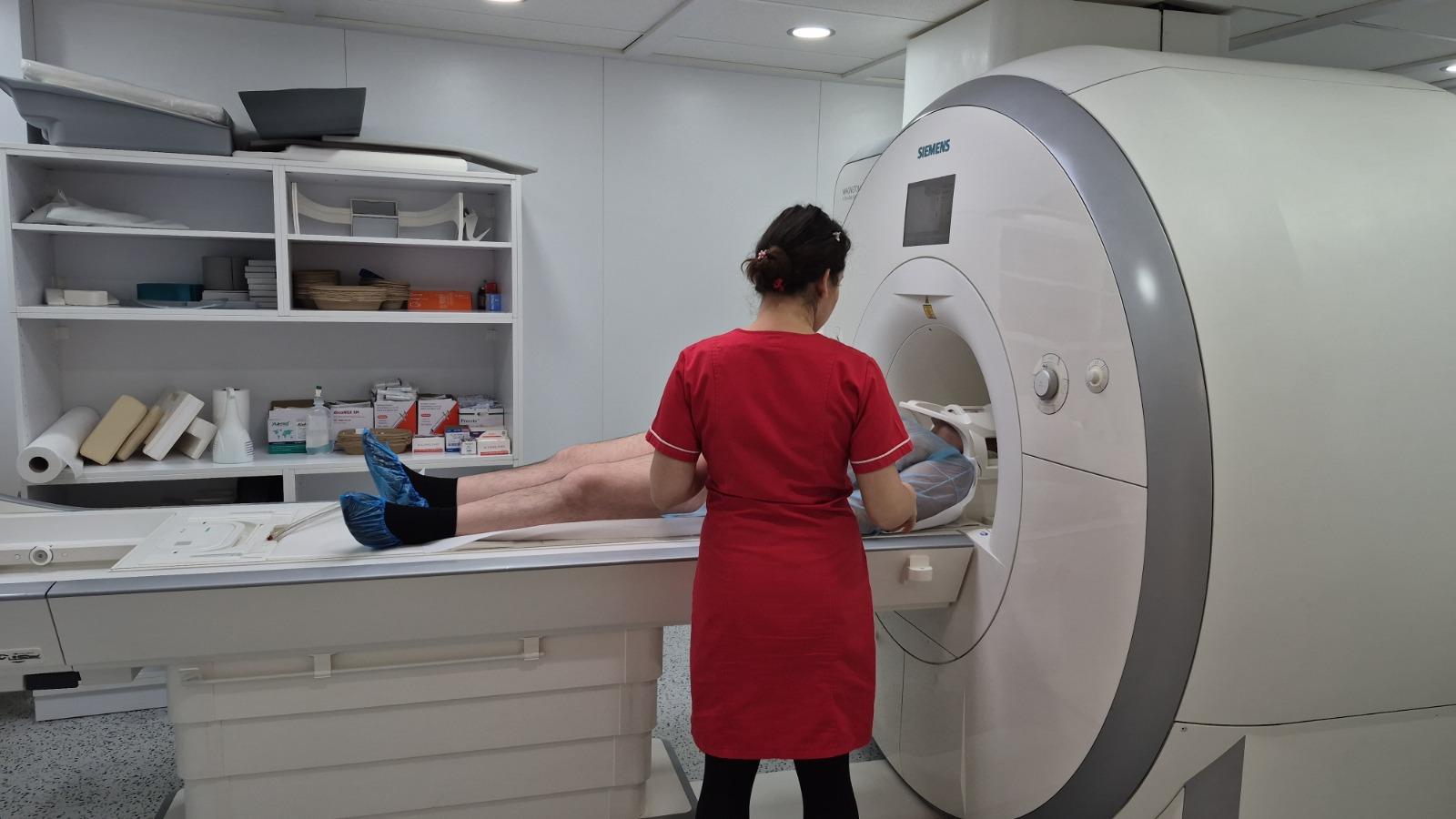
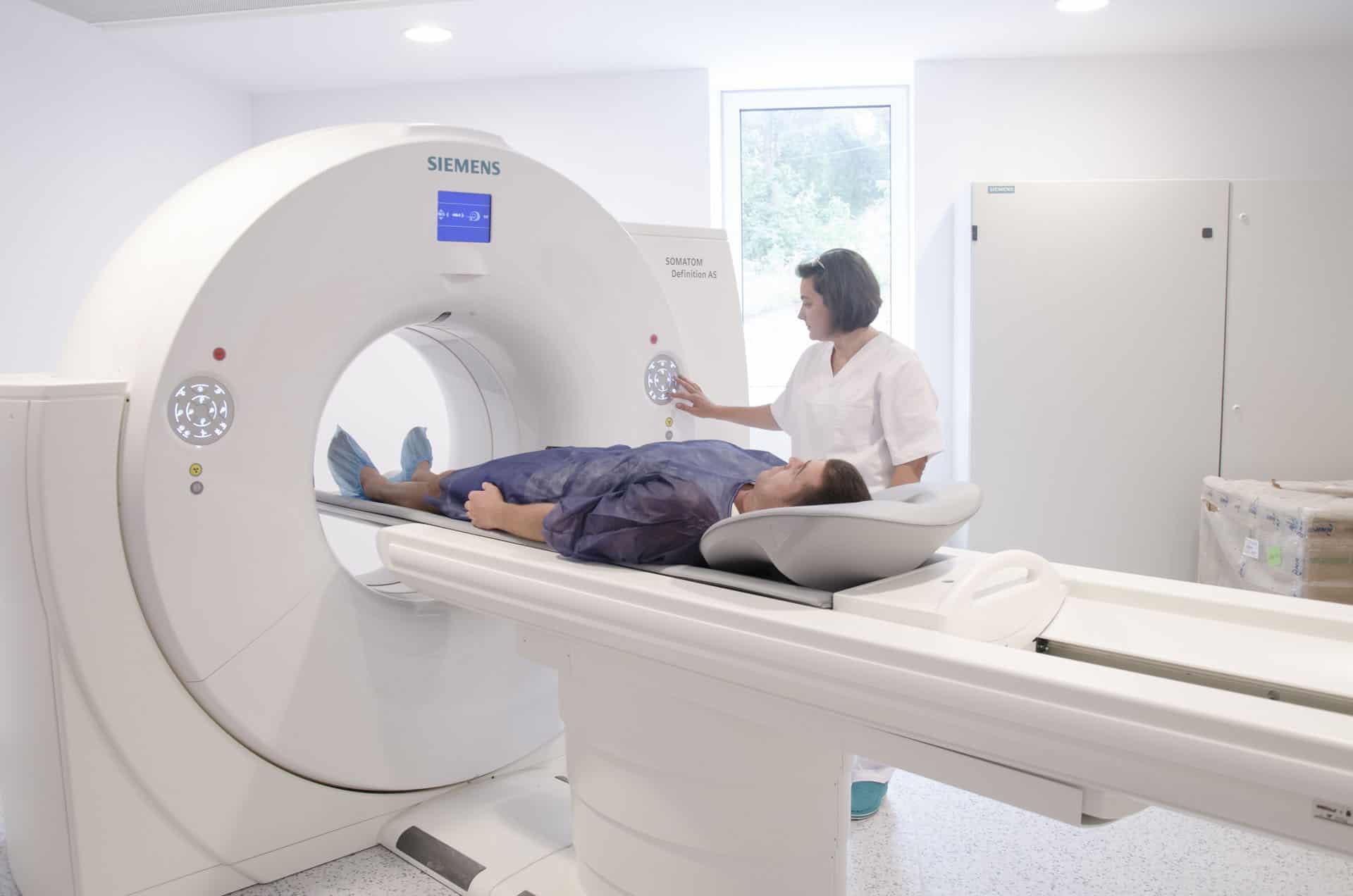
The Scanning Process During a CT scan, you lie on a motorized table that moves through a circular opening in the scanner. The scanner contains an X-ray tube that rotates around your body, taking multiple images from different angles. A computer then processes these images to create cross-sectional views.
Image Creation The computer measures how much radiation passes through different tissues. Dense structures like bone absorb more radiation and appear white, while air-filled structures absorb very little and appear black. Soft tissues appear in various shades of gray depending on their density.
Modern Multi-Slice Technology Our CT scanner captures multiple image slices simultaneously with each rotation. This technology provides:
- Faster scanning times
- Higher resolution images
- Ability to capture moving structures (like the beating heart)
- Reduced motion artifacts
- Lower radiation doses for many examinations
CT Scan Applications
CT imaging serves crucial diagnostic roles across medical specialties.
Neurological Imaging
Brain CT
- Stroke evaluation (ischemic or hemorrhagic)
- Head trauma assessment
- Brain tumor detection
- Hydrocephalus (fluid accumulation)
- Intracranial bleeding
- Sinus disease
Spine CT
- Vertebral fractures
- Disc herniation
- Spinal stenosis
- Degenerative changes
- Post-surgical assessment
Chest Imaging
Lung and Airway
- Lung cancer screening and diagnosis
- Pulmonary embolism (blood clots)
- Pneumonia complications
- Lung nodule evaluation
- Chronic lung disease
- Airway abnormalities
Cardiac CT
- Coronary artery calcium scoring
- CT coronary angiography
- Cardiac structure evaluation
- Pericardial disease
Abdominal and Pelvic Imaging
Solid Organs
- Liver, kidney, and pancreas evaluation
- Tumor detection and staging
- Abscess identification
- Organ enlargement
- Vascular abnormalities
Gastrointestinal
- Appendicitis diagnosis
- Bowel obstruction
- Diverticulitis
- Abdominal masses
- GI tract tumors
Urological
- Kidney stones (CT is the gold standard)
- Urinary tract obstruction
- Bladder and kidney tumors
- Adrenal gland evaluation
Musculoskeletal Imaging
Bone and Joint
- Complex fracture assessment
- Joint evaluation
- Bone tumors
- Infection (osteomyelitis)
- Pre-surgical planning for orthopedic procedures
Vascular Imaging (CT Angiography)
Blood Vessel Visualization
- Aortic aneurysm and dissection
- Peripheral artery disease
- Pulmonary embolism
- Carotid artery disease
- Pre-surgical vascular mapping
Emergency and Trauma
CT is often the first-line imaging modality in emergency settings:
- Polytrauma evaluation
- Internal bleeding detection
- Acute abdominal pain workup
- Stroke assessment
The CT Scan Experience at Sanconfind
Understanding what to expect makes the CT experience more comfortable.
Before Your Scan
Scheduling and Preparation When you schedule your CT scan, we'll provide specific preparation instructions based on the type of examination:
General CT scans: May require no special preparation
Abdominal/pelvic CT: May require fasting and/or oral contrast agents
CT with IV contrast: Requires information about kidney function and allergies
Pre-Scan Questionnaire You'll complete a questionnaire about:
- Current medications
- Allergies (especially to contrast agents or iodine)
- Kidney function and diabetes status
- Pregnancy possibility
- Previous contrast reactions
- Claustrophobia concerns
During the Scan
The Procedure
- You'll change into a gown if required and remove metal objects
- You'll lie on the CT table, positioned by the technologist
- Straps or pillows may be used to help maintain proper position
- The table slides into the circular opening
- The technologist operates the scanner from an adjacent room
- You may be asked to hold your breath briefly
- The scanner rotates around you, though you won't feel it
- The procedure typically takes 10-30 minutes
Contrast Administration If your examination requires contrast material:
- Oral contrast: Drink flavored liquid before the scan to opacify the GI tract
- IV contrast: Injected through a small needle in your arm
- You may feel warmth or a metallic taste with IV contrast (normal and temporary)
Comfort
- The scanner is open at both ends
- You can communicate with the technologist throughout
- The procedure is painless
- Mild claustrophobia is usually manageable with our open scanner design
After the Scan
Immediate Recovery
- If you received IV contrast, we may observe you briefly
- You can usually resume normal activities immediately
- Drink extra fluids to help clear contrast from your system
Results
- Our radiologists interpret your images
- Results are typically available within 24-48 hours
- Urgent findings are communicated immediately
- Reports are sent to your referring physician
CT Scan Safety
We take radiation safety seriously while recognizing CT's invaluable diagnostic benefits.
Radiation Considerations
Understanding Radiation Dose CT uses ionizing radiation, as do all X-ray-based technologies. The radiation dose varies depending on the type of examination:
- Head CT: Relatively low dose
- Chest CT: Moderate dose
- Abdominal CT: Higher dose due to body thickness
Dose Reduction Strategies We employ multiple approaches to minimize radiation:
- Modern scanner with dose-reduction technology
- Protocols optimized for diagnostic quality at lowest necessary dose
- Avoiding unnecessary repeat scans
- Using alternative imaging (ultrasound, MRI) when appropriate
Risk Perspective While radiation exposure carries theoretical risks, these should be weighed against the significant diagnostic benefits of CT. For most patients, the medical value of an indicated CT scan far outweighs the small radiation risks.
Contrast Safety
Iodinated Contrast Agents CT contrast materials contain iodine and are generally very safe. However:
- Allergic reactions can occur (usually mild)
- Kidney effects are possible, especially in patients with existing kidney problems
- Diabetics taking metformin need special instructions
Safety Measures
- Pre-scan screening identifies risk factors
- Modern contrast agents have excellent safety profiles
- We're equipped to manage any reactions
- Alternative approaches exist for high-risk patients
Special Populations
Pregnancy CT during pregnancy is generally avoided unless urgently necessary. The decision involves weighing risks against benefits. When CT is necessary, we use the lowest possible dose.
Children Pediatric CT protocols use significantly reduced radiation doses. We follow "as low as reasonably achievable" (ALARA) principles rigorously.
Why Choose Sanconfind for CT Imaging?
Technology
Our modern CT scanner provides:
- High-resolution imaging
- Fast scan times
- Low-dose protocols
- Advanced reconstruction capabilities
- Reliable, consistent performance
Expertise
Our radiology team offers:
- Board-certified radiologists
- Subspecialty expertise
- Timely interpretation
- Collaborative consultation with referring physicians
- Continuous quality improvement
Patient Care
We emphasize:
- Clear communication about procedures and preparation
- Comfort during examinations
- Prompt results delivery
- Coordination with your healthcare team
Accessibility
We provide:
- Convenient scheduling
- Reasonable wait times
- Competitive pricing
- Integration with other Sanconfind services
Frequently Asked Questions
How long does a CT scan take?
The actual scanning takes only a few minutes. However, preparation, positioning, and (if needed) contrast administration mean the total appointment is typically 30-45 minutes.
Is the CT scanner enclosed?
Our scanner has a wide, open design that most patients find comfortable. The opening is short and open at both ends. Even patients with mild claustrophobia usually manage well.
Will I feel anything during the scan?
The scan itself is painless. If you receive IV contrast, you may feel warmth, flushing, or a metallic taste temporarily. This is normal.
How is CT different from MRI?
CT uses X-rays and excels at imaging bone, detecting bleeding, and providing fast scans in emergency situations. MRI uses magnetic fields and is superior for soft tissue detail, particularly in the brain, spine, and joints. Your doctor recommends the most appropriate study.
Can I eat before a CT scan?
It depends on the examination. Some scans require fasting; others don't. We'll provide specific instructions when you schedule.
Is the radiation dangerous?
While CT involves radiation, modern scanners use the lowest doses necessary for diagnosis. For indicated examinations, the diagnostic benefits greatly outweigh the small theoretical risks.
How soon will I get results?
Routine results are typically available within 24-48 hours. Urgent findings are communicated immediately to your physician.
Schedule Your CT Scan
For high-quality CT imaging with expert interpretation, contact Sanconfind Medical Center.
Contact Us
- Phone: +40 244 990
- Email: office@sanconfind.ro
- Location: Sanconfind Medical Center, Poiana Câmpina, Prahova County, Romania
Our team will schedule your appointment, provide preparation instructions, and answer any questions about your upcoming CT scan.
Sanconfind Medical Center's CT imaging department combines advanced technology with expert interpretation to provide the diagnostic information that guides effective patient care.